
オープンボードには宙色飛行船のメンバー以外の方でも投稿やコメントができます。
※メンバー以外の方はこのオープンボード以外に〔SNS〕宙色飛行船の内部に入ることはできません。
・リンクからの誘導にはご注意ください。
・誹謗、中傷、荒らし等は無視してください。(これらは運営者側の判断で削除します)
※メンバー以外の方はこのオープンボード以外に〔SNS〕宙色飛行船の内部に入ることはできません。
・リンクからの誘導にはご注意ください。
・誹謗、中傷、荒らし等は無視してください。(これらは運営者側の判断で削除します)
▼ 返信・コメントフォーム
Introduction
https://blockblastsaga.com/
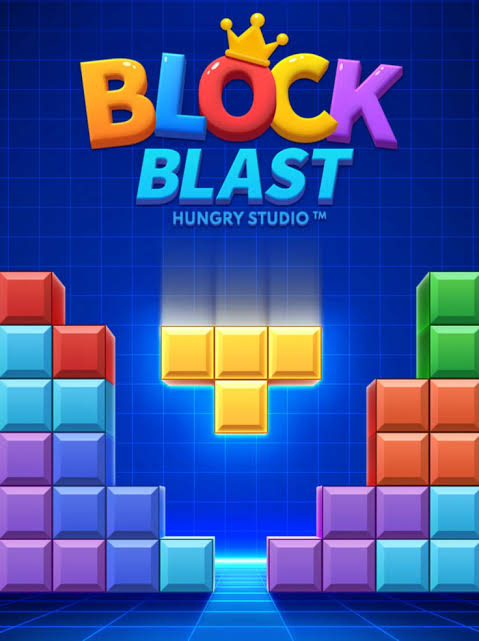
Some games are exciting because they are fast and competitive. Others are enjoyable because they let you slow down, think carefully, and improve at your own pace. BLOCK BLAST belongs to the second group. It is a simple block puzzle game that is easy to understand but offers enough challenge to keep each round interesting.
The basic idea is familiar to anyone who has played classic tile or grid-based puzzles: place different-shaped blocks on a board, complete lines, and clear them to make room for new pieces. However, the open-ended layout gives the game a thoughtful rhythm. You are not racing against another player, so the main goal is to make smart decisions and create a higher score than before.
Whether you have a few minutes during a break or want a calm game to play for longer, BLOCK BLAST can be a pleasant choice. Its straightforward rules make it accessible, while its limited space encourages planning and careful observation.
Gameplay
The game usually begins with an empty grid and a small selection of block shapes. These pieces may be made up of several connected squares, forming lines, corners, or larger patterns. Your task is to place them on the board in a way that creates complete horizontal or vertical lines.
When a line is completed, it disappears. This clears space and usually adds points to your score. You continue choosing and placing pieces until there is no suitable space for the next block. The round then ends, and you can try again with a new strategy.
One of the most enjoyable parts of the gameplay is that the blocks do not normally fall automatically. You have time to examine the board and decide where each piece should go. This makes the experience less about quick reactions and more about spatial reasoning.
At first, it may seem sensible to place pieces wherever they fit. However, the board can become crowded surprisingly quickly. A move that looks useful now might block a better opportunity later. This creates a gentle tension: every placement solves one problem but may create another.
The game is also easy to experience in short sessions. You can complete a few moves while waiting for something, or continue playing as you try to beat your previous score. There is no complicated story, long tutorial, or large set of controls to learn. Most of the enjoyment comes from the satisfying process of arranging shapes and clearing the board.
Tips for Better Play
1. Keep the board flexible
Avoid filling the center or one side of the board too early. Open areas are valuable because they can accommodate many different shapes. Try to leave several spaces where both small and large pieces can fit.
2. Look at all available pieces
Before placing anything, examine the full group of blocks currently offered. A piece that seems difficult to use may fit perfectly in a space created by another move. Thinking one step ahead can prevent unnecessary gaps.
3. Clear lines regularly
Completing lines is important not only for earning points but also for maintaining room on the board. If you focus only on placing pieces without clearing anything, empty spaces may gradually become disconnected and difficult to use.
4. Do not rush to use the largest piece
Large blocks can be tempting to place immediately, especially when there is an obvious open area. However, saving a large space for later may be more useful. Smaller pieces are often easier to fit into awkward corners, while larger pieces need more planning.
5. Use corners carefully
Corners can either be helpful storage areas or difficult traps. A compact block may fit well in a corner, but an awkward shape could leave unused spaces around it. Before placing a piece there, consider whether the remaining gaps will still be useful.
6. Plan around empty spaces
Perfect boards are not always necessary. What matters is creating spaces that can accept future blocks. Try to avoid single-square holes or narrow gaps that cannot be filled by the pieces you are likely to receive.
7. Learn from each round
When a game ends, take a moment to think about what caused the board to become crowded. Perhaps you placed pieces too close to one edge, ignored a possible line clear, or used a large block too early. Small adjustments can make later attempts much more successful.
8. Focus on personal improvement
Puzzle games are often more enjoyable when treated as a personal challenge. Instead of worrying about reaching an extremely high score, compare each attempt with your previous one. Improving your planning skills is part of the fun.
Conclusion
BLOCK BLAST is a simple but engaging puzzle game built around placement, patience, and good space management. Its rules are easy to learn, yet every round can develop differently depending on the shapes you receive and the choices you make.
The game works well for both casual players and puzzle fans. You can play for only a few minutes, or spend more time experimenting with strategies and trying to improve your score. By keeping the board open, studying your available pieces, and clearing lines regularly, you can make each round last longer and feel more satisfying.
Most importantly, there is no need to rush. Take a moment to look at the board, consider your options, and enjoy the quiet satisfaction of finding a clever placement. That calm, thoughtful style is what makes BLOCK BLAST an interesting game to return to.
検索フォーム
カテゴリー
- 社会問題・呼びかけ(356)
- 環境問題・自然(165)
- 生命・動物・植物(78)
- 文化・伝統・知恵(152)
- 趣味・創作・発表(322)
- 日常・暮らし(359)
- 簡単レシピ(111)
- コンサート・イベントのお知らせ(24)
- 練習用(コメントの練習をどうぞ)(25)
- その他(3541)
新着記事
- 偉哥邊度買價錢較平 (0)
- 壯陽藥推薦完整比較:威而鋼、犀利士、樂威壯差異與選擇指南 (0)
- 樂威壯那裡買價錢便宜 (0)
- 必利勁哪裡買?必利勁網購、藥局價格與流程大公開 (0)
- 樂威壯在台灣哪裡買?購買方法指南 (0)
- 威而鋼價錢多少? (0)
- 犀利士價錢多少? (0)
- Riffusion AIミュージック生成ノート (0)
- boy games (0)
- Visit SoundButtonsPro (0)
- 水果味煙彈推薦:葡萄、芒果、西瓜十大熱門選擇 (0)
- 持有電子煙罰多少?最新台灣規定一覽 (0)
- (W) ASICS Gel Spike 3 Blue (0)
- ASICS Green Full Zip Hoodie Jacket (0)
- adidas Half Zip Pullover Sweatshirt (0)
- Bape Graffiti Print Patchwork Long (0)
- Oakley Polarized High Definition (0)
- Anta Life Series Low Grey White Purple 912038820 (0)
- ASICS Gel Task 3 White Deep Ocean (0)
- Valentino Leather Sneaker Black Fashion Cmft (0)
新着レス
- Pig Latin Translator ⇒ 映画情報サイトのご紹介
- Falling in Love with the Watermelon Puzzle ⇒ Snow Rider 3D
- reading speed test ⇒ rule34dle
- ao3dle ⇒ rule34dle
- https://scritchyscratchy.cc ⇒ Re: グッチサングラススーパー
- r34dle ⇒ rule34dle
- Image Generator ⇒ Simply describe
- zunaira ⇒ orbit kick
- Smithemma99 ⇒ Wackyflip
- Eggy Car ⇒ bubble shooter
- james john ⇒ A Sprunki Adventure Awaits!
- kim ⇒ A Sprunki Adventure Awaits!
- Pooja Kaushik ⇒ A Sprunki Adventure Awaits!
- scott ⇒ Geometry
- Basketball Stars ⇒ NO-TITLE
- anime expeditions wiki ⇒ wacky flip
- MotoX3m ⇒ wacky flip
- Meowdoku ⇒ Sora 2 AI Video Generator
- hklifesim ⇒ banned from equestria
- nikolasal willsom ⇒ same
